The purpose of school is not only to prepare students for exams, but to prepare them for life beyond school. Today’s world demands far more than academic knowledge. Students are expected to demonstrate self-awareness, adaptability, teamwork, leadership, and problem-solving skills—qualities that cannot be fully developed through textbooks alone.
One of the most effective ways to nurture these skills is through learning outside the classroom, especially through adventure learning experiences. When students step beyond school walls, they encounter real-world challenges that encourage curiosity, resilience, and independent thinking.
Adventure learning transforms education from something students receive into something they actively experience.
What Is Learning Outside the Classroom?
Learning outside the classroom refers to educational experiences that take place beyond the traditional school environment. These experiences may happen in natural settings, activity centres, workshops, or outdoor learning destinations.
It is not about leaving learning behind—it is about changing the context of learning.
Learning outside the classroom:
-
Places students in unfamiliar environments
-
Encourages exploration and discovery
-
Connects theory to real-life application
-
Promotes experiential, hands-on education
Whether it is a nature walk, a team-building challenge, or an adventure activity, the goal remains the same: to give students meaningful learning experiences that prepare them for real life.
How Adventure Learning Differs from Conventional Teaching
Traditional classroom teaching focuses heavily on:
-
Memorisation
-
Repetition
-
Listening and note-taking
While this approach is effective for delivering foundational knowledge, it often leaves little room for developing soft skills such as decision-making, leadership, collaboration, and adaptability.
Adventure learning, on the other hand:
-
Encourages critical thinking
-
Requires students to solve real problems
-
Promotes teamwork and communication
-
Builds confidence through challenge
When students face practical situations—like navigating a trail, building a raft, or completing a rope challenge—they learn through action, reflection, and collaboration.
Why Students Learn Better Through Adventure Learning
1. Learning Becomes Meaningful and Memorable
Students retain information better when they associate learning with experiences. Adventure learning adds emotional and physical engagement, which strengthens memory and understanding.
For example:
-
Environmental science becomes real during nature walks
-
Physics concepts appear during rope and balance activities
-
Leadership skills emerge during group challenges
These experiences create learning moments that last far longer than classroom lectures.
2. Builds Confidence and Self-Esteem
Adventure activities challenge students physically and mentally. When students overcome fears—such as climbing, kayaking, or zip-lining—they gain confidence in their abilities.
This sense of achievement:
-
Improves self-belief
-
Encourages positive risk-taking
-
Builds emotional resilience
Many students return from adventure trips more confident, motivated, and willing to participate in classroom activities.
3. Develops Teamwork and Leadership Skills
Adventure learning rarely happens alone. Most activities require collaboration, communication, and trust.
Students learn to:
-
Work as a team
-
Listen to others
-
Lead when needed
-
Support peers during challenges
These skills are essential for future academic success, professional environments, and personal relationships.
4. Encourages Physical Activity and Wellbeing
In an increasingly digital world, students spend more time sitting and less time moving. Adventure learning promotes physical activity in a fun and engaging way.
Benefits include:
-
Improved physical fitness
-
Reduced stress and anxiety
-
Better focus and mood
-
Healthier lifestyle habits
Outdoor learning also has a positive impact on mental wellbeing, helping students feel refreshed and energised.
5. Supports Social and Emotional Development
Learning outside the classroom exposes students to new situations where they must adapt, communicate, and empathise with others.
These experiences:
-
Strengthen emotional intelligence
-
Improve social skills
-
Reduce behavioural issues
-
Encourage inclusivity and cooperation
An Ofsted report highlighted that learning outside the classroom significantly contributes to personal, social, and emotional development, while also improving classroom behaviour and engagement.
6. Improves Academic Engagement and Achievement
Research consistently shows that students who participate in learning outside the classroom are more engaged academically.
A 2016 independent study by the School Travel Forum revealed:
-
60% of teachers observed increased confidence, resilience, and wellbeing
-
61% of students achieved higher than their predicted grades
Adventure learning does not replace academics—it enhances academic performance by making learning more engaging and relevant.
The Often-Overlooked External Benefits
When planning school trips, educators often focus on measurable outcomes such as curriculum links or academic improvement. However, many of the most valuable benefits are external and intrinsic.
These include:
-
Reduced behavioural problems
-
Improved peer relationships
-
Greater cultural awareness
-
Inspiration for future career interests
Although these benefits are difficult to quantify, they have a lasting positive impact on students’ lives.
Addressing Concerns Around Cost and Organisation
While many teachers wish to offer more learning outside the classroom opportunities, cost and organisation are common concerns. Accommodation, transport, insurance, and paperwork can make trips seem expensive or complicated.
However, when considering:
-
Long-term student development
-
Improved classroom behaviour
-
Increased engagement and confidence
The overall value of adventure learning far outweighs the initial investment.
Adventure Learning Near Bangalore: A Natural Classroom
For schools planning adventure learning experiences near Bangalore, nature-based destinations offer the perfect setting for meaningful education.
Surrounded by forests and open landscapes, Vrindavana Nature Trails provides an ideal environment for students to learn, explore, and bond outside the classroom.
Located between the Banantimari State Forest and Hosadoddl Lake, the destination offers a safe, immersive setting that blends education, adventure, and nature.
Activities That Inspire Young Minds
At Vrindavana Nature Trails, activities are designed to promote curiosity, teamwork, and confidence while keeping students safe and engaged.
Popular School Activities Include:
-
Nature Walks – Encouraging observation, environmental awareness, and curiosity
-
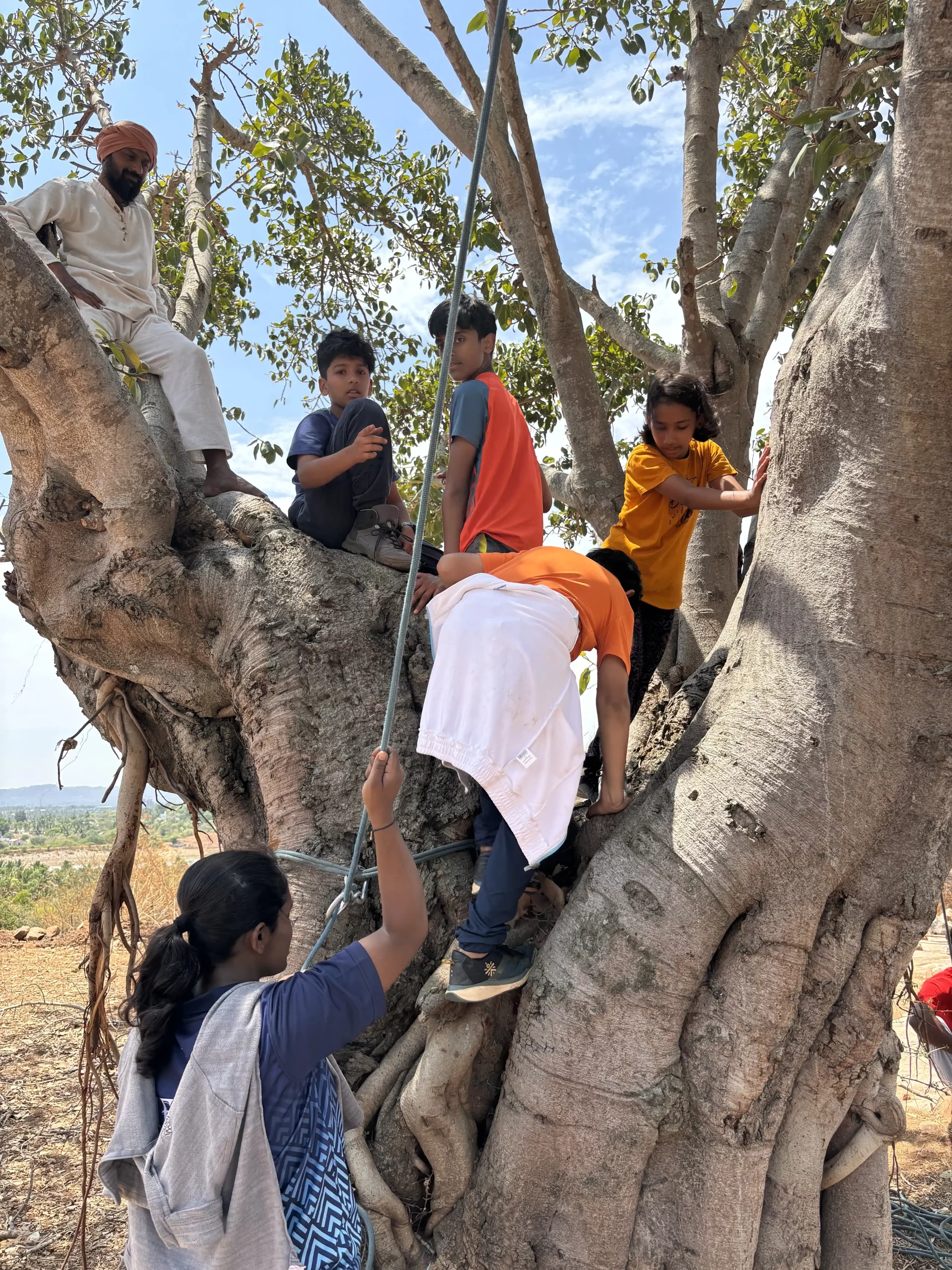
Rope Team-Building Activities – Building trust, balance, and coordination
-
Trekking – Developing endurance, perseverance, and leadership
-
Kayaking – Promoting confidence, coordination, and teamwork
-
Raft Building Challenges – Encouraging problem-solving and collaboration
-
Zip-lining – Helping students overcome fear and build confidence
-
Paintball as a Team-Building Activity – Developing strategy, trust, and group coordination
-
Coasteering Team-Building Days – Combining adventure with communication and leadership
Each activity is guided by trained professionals and structured to suit different age groups.
Why Schools Choose Vrindavana Nature Trails
Schools across Bangalore choose Vrindavana Nature Trails because it offers:
-
Safe adventure zones
-
Spacious natural surroundings
-
Well-planned school itineraries
-
Professional guidance and supervision
-
Nutritious food and comfortable facilities
The focus is not just on fun, but on purpose-driven adventure learning.
Learning That Extends Beyond the Trip
The impact of adventure learning does not end when students return to school. Teachers often notice:
-
Improved classroom participation
-
Stronger peer relationships
-
Better behaviour and focus
-
Increased confidence and independence
These outcomes make adventure learning one of the most effective educational tools available today.
Conclusion: Why Adventure Learning Matters More Than Ever
Adventure learning is not a luxury—it is a necessity in modern education. As the demands of society evolve, students need experiences that teach them how to think, collaborate, adapt, and lead.
By taking learning outside the classroom, schools give students the opportunity to grow into confident, capable individuals who are prepared not just for exams, but for life.
For schools in and around Bangalore, destinations like Vrindavana Nature Trails provide the perfect balance of safety, learning, adventure, and unforgettable experiences.
Frequently Asked Questions (FAQs)
What is adventure learning?
Adventure learning is an educational approach that uses outdoor and experiential activities to develop life skills, confidence, and teamwork.
Why do students learn better outside the classroom?
Real-world experiences make learning more engaging, practical, and memorable, improving understanding and retention.
Is adventure learning safe for school students?
Yes. When conducted at professional centres with trained instructors and safety protocols, it is very safe.
How does adventure learning support academic performance?
It increases engagement, confidence, and motivation, which positively affects classroom learning and academic results.
What age groups benefit from adventure learning?
Adventure learning can be adapted for primary, middle, and high school students.
How long should an adventure learning trip be?
Trips can range from one-day programs to overnight or multi-day experiences, depending on school goals.
Why choose Vrindavana Nature Trails for school trips?
It offers a safe natural environment, structured adventure activities, professional guidance, and enriching learning experiences.
Does adventure learning help with behaviour and discipline?
Yes. Studies show it improves behaviour, social skills, and emotional development in students.